
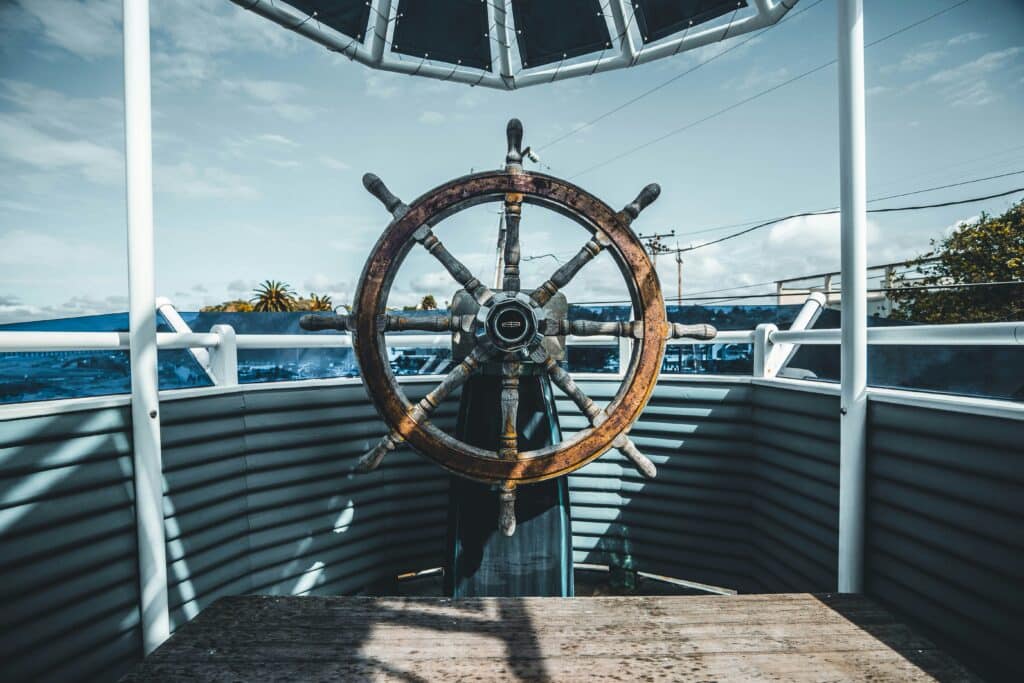
A ship’s navigator rarely holds a perfectly straight line. Not because the original course was wrong, but because the ocean doesn’t hold still. Wind shifts. Currents pull. A storm builds two hundred miles east of where it was expected. The navigator is relied on to constantly check position and adjust course to account for these changes.
The heading you set this morning was right for the ocean you had this morning, but by afternoon, you have a different ocean and need a different heading to stay on the same course.
That’s not a failure. The Captain won’t accuse the navigator of being wrong. The entire profession is built around a simple assumption: a good decision, made with the best information available at the time, may need to change as reality changes.
Somewhere along the way, many of us stopped treating our opinions as hypotheses and started treating them as part of who we are. Once we’ve publicly committed to a view about a person, a business strategy, a market, or even what the next year will look like, changing it can feel like admitting we weren’t smart enough in the first place. So, we defend yesterday’s conclusion long after yesterday’s information has expired.
We’re not protecting the truth. We’re protecting the version of ourselves that said it out loud.
That’s the quiet cost of certainty. We often mistake consistency for wisdom. But a navigator who never changes course isn’t demonstrating conviction. They’re ignoring the ocean.
The people who make the best decisions over time aren’t the ones who are right most often. They’re the ones who recalibrate most effectively. They ask a different question. What’s changed? What do I know now that I didn’t know then? They spend less time asking, was I right?
If being right is the goal, every new fact feels like a threat. If getting closer to reality is the goal, every new fact becomes a gift. This doesn’t mean changing your mind for the sake of changing it; sometimes the right decision is to stay exactly where you are. The goal isn’t constant change; it’s continuous calibration. It’s the willingness to compare your beliefs against reality and adjust only when reality gives you a reason to.
We encounter this every day.
In business, we can cling to strategies that worked five years ago even though our customers, competitors, and markets have changed. In our own lives, we can hold onto stories about who we are, what we’re good at, what we’re capable of, what we could never do, even after experience has given us reason to rewrite them.
And perhaps most importantly, it shows up in the way we think about other people. The impression you formed of someone five years ago may have been completely fair based on what you knew then. But five years is a long time; people grow, and circumstances change. Experience reshapes us. If you’re still navigating by a heading you set years ago without ever checking your position, you’re not honoring the truth. You’re honoring an old conclusion.
The navigator wasn’t wrong at dawn. They were simply working with the ocean they had.
Our job isn’t to defend yesterday’s heading. It’s to keep checking our position, to stay aligned with the reality that’s in front of us today, and to have the humility to adjust our heading as reality changes.
Because the ocean doesn’t hold still.
“The art of life lies in a constant readjustment to our surroundings.” – Kakuzo Okakura
Where in your life are you still sailing by a heading you haven’t checked in a while?
Have a great weekend.
-Vijay